
Winter fishing through the ice rewards a light touch. The fish are often close to the bottom, bites can be subtle and the cold makes every piece of tackle behave differently than it does in summer. A rod that feels too soft can miss a small strike, a reel that binds in the cold can cost you a fish, and the wrong line can turn stiff or hard to see. Light tackle matters because it lets you feel what is happening below the hole.
This guide explains how to choose ice rods, reels and line, what each choice does in cold conditions and how to set up a simple kit without buying more than you need. It describes the general characteristics of gear rather than endorsing any product. Fishing gear is only one part of the trip, and the safety steps in our guide to ice augers and the advisory checks in planning an ice trip come first.
In brief
- Light rods and smooth reels make small bites easier to feel.
- Monofilament stretches but can stiffen in deep cold.
- Braid transmits every nibble but shows in clear water.
In this guide
Ice rods
Ice rods are short, typically between about two and three feet, so they are easy to handle over a small hole. Their power and action determine how they feel. A light power rod with a fast action can detect a bite quickly and set the hook with a small movement, which suits panfish and smaller species. A heavier rod suits larger fish, but it can mask small strikes.
Look at the handle and the guides. A handle with a comfortable grip reduces fatigue when you jig for long periods, and guides that are well sealed keep the line from freezing up. Some ice rods include a reel seat for spinning reels, while others are designed for a tip-up or a jigging setup. Choose one that fits the way you fish.
Ice reels
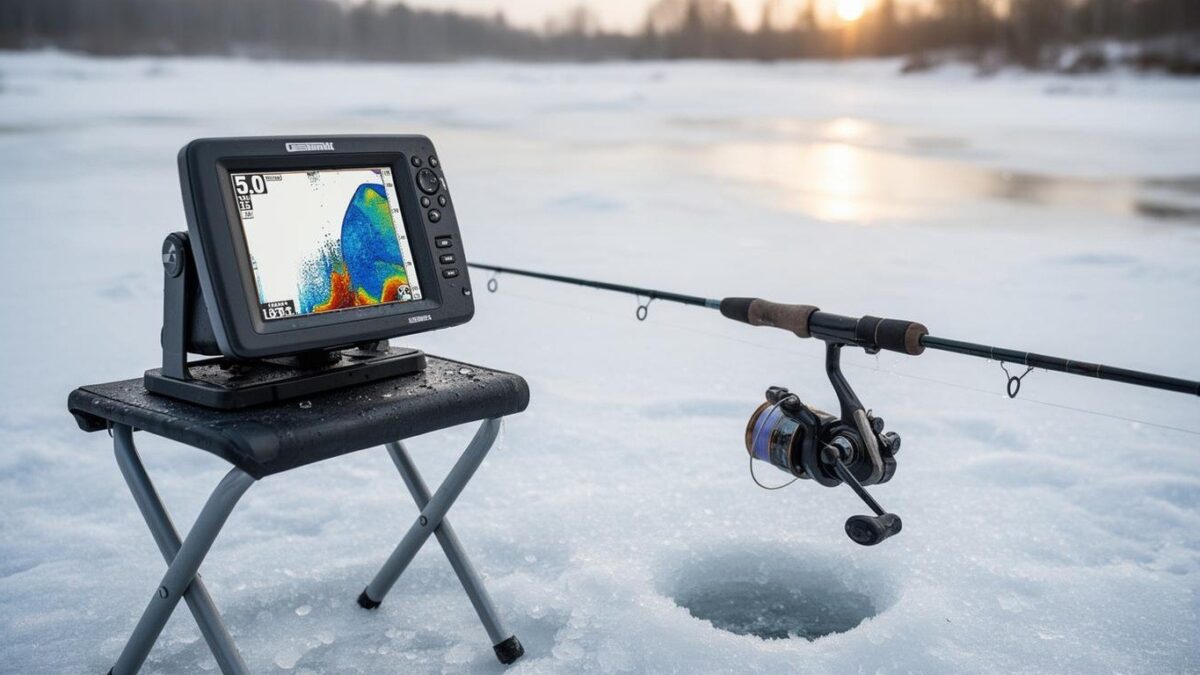
Most anglers use a small spinning reel on an ice rod, since it is easy to cast from the hole and handles light line well. Check the drag, which controls how line slips when a fish pulls. A smooth drag matters more than a high maximum setting, because a fish that runs hard needs line to move without snapping. In the cold, grease can thicken, so look for reels that are rated for winter use or that can be cleaned and re-lubricated easily.
Some anglers prefer a simple reel with a handle that holds a line on a spool, while others want a reel that is quick to use with one hand. Test the reel before buying, if you can. Turn the handle, check the spool and listen for grinding.

Choosing line
Line is often the most overlooked part of the kit, and it matters a great deal in winter. Monofilament is the most common choice. It has some stretch, which can cushion sharp strikes and reduce the chance of pulling a hook free. In very cold weather, however, monofilament can stiffen and develop memory, meaning it keeps coiling after it leaves the spool, which can tangle your setup.
Fluorocarbon is denser and less visible in clear water, which can help with wary fish. It sinks quickly and holds its shape well. Braided line has very little stretch, which transmits small bites clearly, and it is strong for its diameter. Its visibility can be a disadvantage in clear water, so many anglers attach a leader of monofilament or fluorocarbon.
- Monofilament. Strength: Stretch cushions strikes. Trade-off: Can stiffen and coil in cold.
- Fluorocarbon. Strength: Low visibility and sinks well. Trade-off: Less stretch than monofilament.
- Braided. Strength: Very sensitive and strong. Trade-off: Can be visible in clear water.
Matching tackle to the fish
Start with the fish you are targeting and the water you are fishing. Small panfish and perch often respond to light lines and small baits, while larger species may need a heavier line and a stronger rod. Test the line strength against the size of the fish you expect, and avoid using a line so light that it breaks on the first large fish.
A simple kit can cover most situations. A light rod, a smooth spinning reel, a spool of monofilament for general use and a small spool of braid or fluorocarbon for sensitive presentations will handle a wide range of days. Add spare jigs, a small pair of pliers and a net before you add more specialized equipment.
Keeping gear working in the cold
Store gear in a dry bag or a sealed box so moisture does not freeze inside the reel. Wipe the rod and reel after each use, and check the guides for ice build-up. If a reel stops turning, bring it into a warm space before you try to fix it, and avoid forcing parts that are frozen. Keep spare line dry and out of direct sun, because sunlight can weaken some lines over time.
Cold hands make small tasks difficult, so practice tying knots at home and carry a small pair of gloves that lets you handle line without losing dexterity. Treat your tackle with the same care you give to your warm layers, since both make the day more productive.
The short version
Light rods and smooth reels make small bites easier to feel. Monofilament stretches and cushions strikes but can stiffen in deep cold, fluorocarbon is less visible and sinks quickly, and braid transmits every nibble but shows in clear water. Build a simple kit around the fish you chase, keep it dry and clean, and test your line before a trip. Good tackle helps, but a safe and well-planned trip matters more.
Tackle questions
Which line is best for panfish?
Light monofilament or fluorocarbon often suits small fish, but test the line strength against the species you target.
Why does my line coil in the cold?
Some monofilament holds memory in low temperatures. Store it dry and keep spare spools out of the car cabin.
Do I need a fish finder?
Not necessarily. A finder helps locate fish, but it does not show whether the ice is safe.